
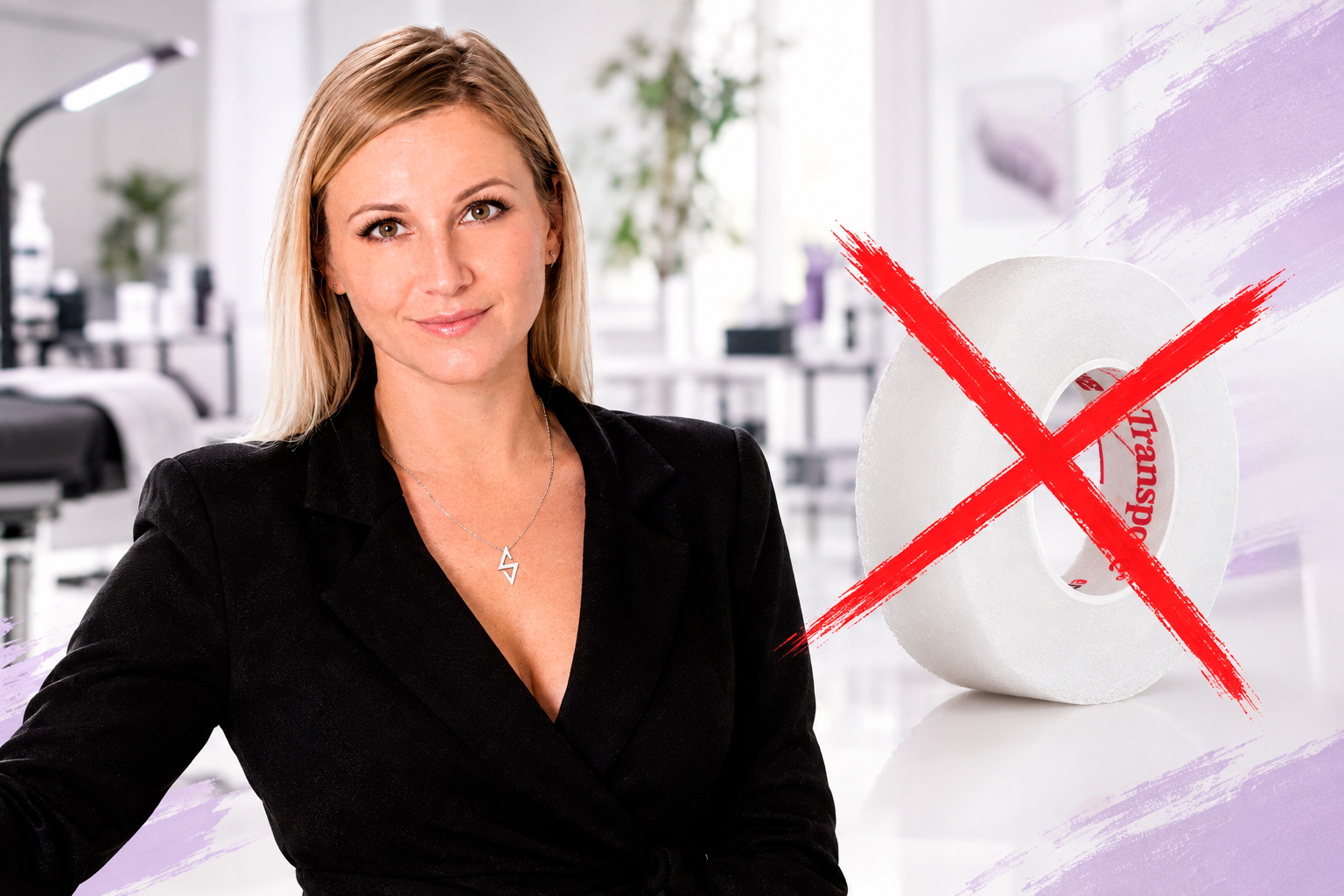
Why I Don’t Use Tape for Eyelash Extensions
When choosing a lash artist, you probably start by looking at photos of their work.
I would also pay attention to how they work.
And one of the things I personally look at is tape.
It may also be called lash tape, adhesive tape, or eye tape.
In this article, I’ll use the word “tape” because it’s one of the most common terms for this tool in the lash industry.
I don’t use tape in my work.
And if I were choosing a lash artist for myself, seeing a large amount of tape used during treatments would already make me stop and think.
Let me explain why.
What is tape actually used for?
Tape can be used to gently lift or reposition the upper or lower eyelid in a direction that makes the work easier for the lash artist. This helps expose the natural lash roots and makes isolation easier.
And yes, working with tape can be significantly more convenient.
It can help you reach the area you need more quickly.
The lash roots become easier to see.
Isolation becomes easier.
And the work may look technically cleaner.
That’s exactly why I believe the ability to work without tape can say something about a lash artist’s technical skills.
When you remove a tool that makes the job easier, you have to learn how to do everything using your hands and tweezers.
I made a conscious choice to work without tape
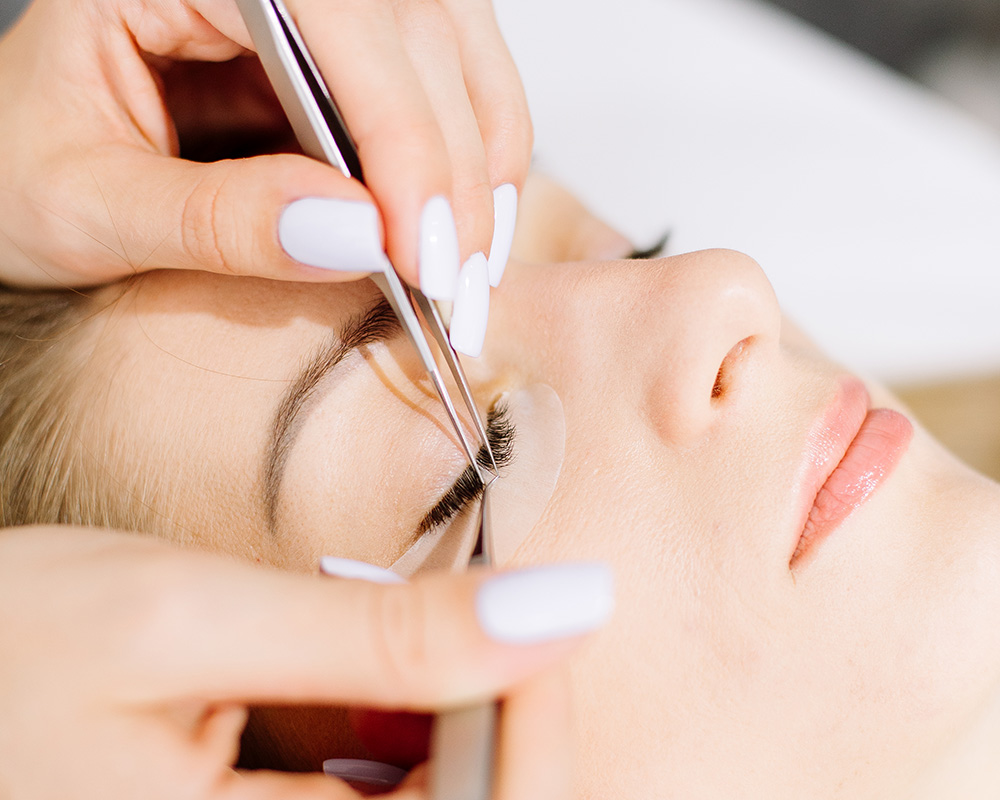
My technique is built around this approach.
I don’t need to pull the eyelid up with tape to reach the lashes.
I need to know how to position my hand correctly, stabilize the eyelid, isolate the natural lash, and adapt to each client’s individual features.
It’s more challenging.
But once the technique is mastered, you can ultimately work faster and more precisely.
That’s exactly why we teach this approach at our school, too.
It’s harder for students at the beginning. After all, it’s much easier to stick on a piece of tape and create a more convenient working position.
But my job as an educator isn’t to teach people to look for the easiest way out.
My job is to teach them to master their technique.
That’s why our students also learn to work without tape.
What bothers me most about tape?
It’s not a small piece of thin tape that a lash artist genuinely needs in a difficult situation.
I can understand that.
What bothers me is when tape practically becomes part of the entire workstation setup.
Wide strips.
Multiple pieces of tape.
Tape across the eyebrow.
Tape on the forehead.
Tape pulling the skin in completely different directions.
And especially when the tape isn’t even trimmed to suit the individual client. Instead, the artist simply takes a wide strip and sticks it on as it is.
At that point, I’m no longer thinking about technique.
I’m asking myself:
Who is this making things more comfortable for?
The client?
Or the lash artist?
The client has skin, too
And this matters to me.
We live in a world where people spend a considerable amount of money on facial skincare.
Cosmetic treatments.
Professional procedures.
Creams.
Serums.
Advanced skincare technologies.
Sometimes, a single cream can cost €200–250.
Professional skincare treatments can also add up to a substantial amount.
Then someone comes in for a lash appointment.
And we casually stick a wide strip of tape on their forehead, across their eyebrow, or around their eye.
Something about that just seems strange to me.
If a lash artist works in the premium price segment, I find it even harder to understand.
Because caring for clients shouldn’t be reflected only in a beautiful studio, expensive materials, and a high treatment price.
It should also show in the little things.
“But tape makes the process faster”
Maybe it does.
Definitely during training.
That’s exactly why it’s such a convenient tool.
But if a lash artist can learn to work without it, why not develop that skill?
I believe a lash artist should be able to isolate natural lashes without constantly having to pull the eyelid up with tape.
It comes down to skill.
I would rather invest time in developing that skill than keep looking for new ways to make the work more convenient for myself.
That’s one of the defining features of my technique.
So yes, I do judge the use of tape
I’m not going to pretend it doesn’t matter to me.
If I open a lash artist’s profile and see that almost every set is done using a large amount of tape, I probably wouldn’t book an appointment with them.
That doesn’t necessarily mean the artist is bad at applying lash extensions.
But to me, it’s an indicator.
It tells me something about how much the artist organizes their work around their own convenience.
I look for something different.
I want a lash artist to be able to adapt to the client, rather than constantly adapting the client to suit their own needs.
That’s why I work without tape myself.
And that’s why we teach this approach at our school.
Because good technique isn’t just about placing each lash beautifully.
It’s also about being able to perform a demanding procedure without unnecessary aids, without unnecessary interference, and with the utmost respect for the person lying on your treatment bed.
So, if you’re choosing a lash artist, I’d recommend looking beyond the final result.
Pay attention to what happens behind that result, too.
Sometimes, it tells you much more about an artist than a perfect photo of their lashes.
Want to learn how? Sign up for a training course!